The Role of Springs in Pilates: How Resistance Becomes Support
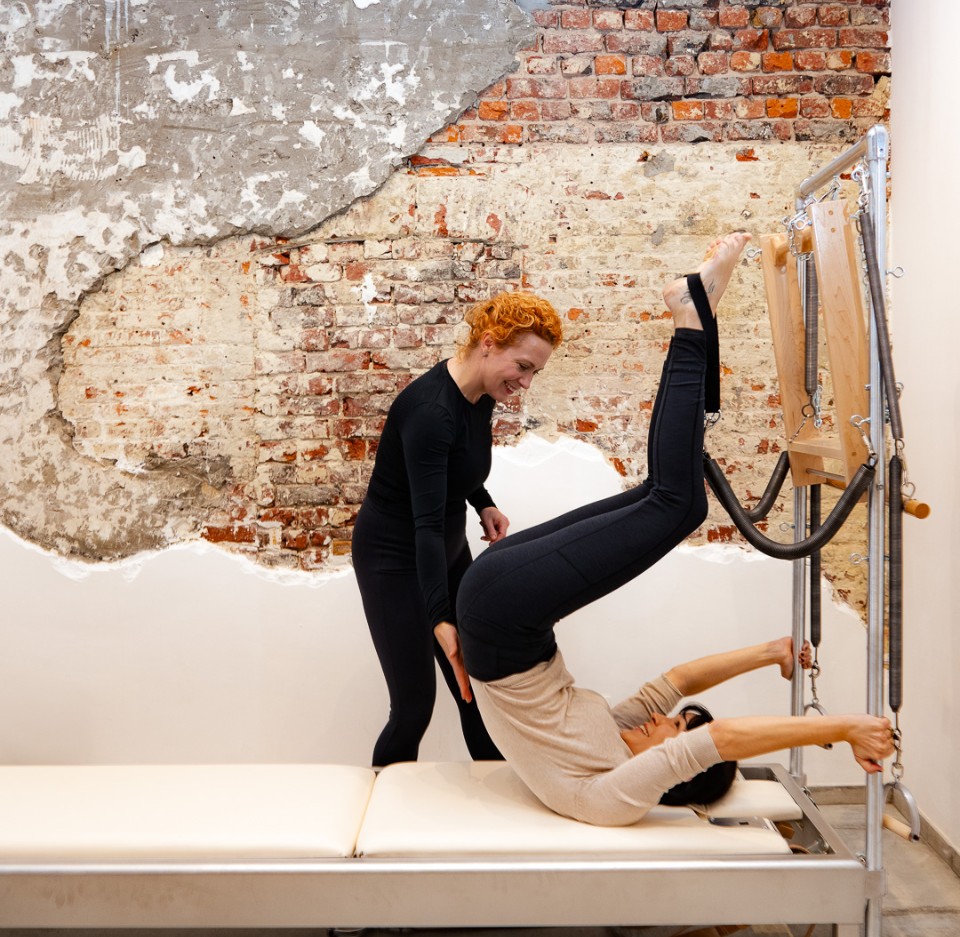
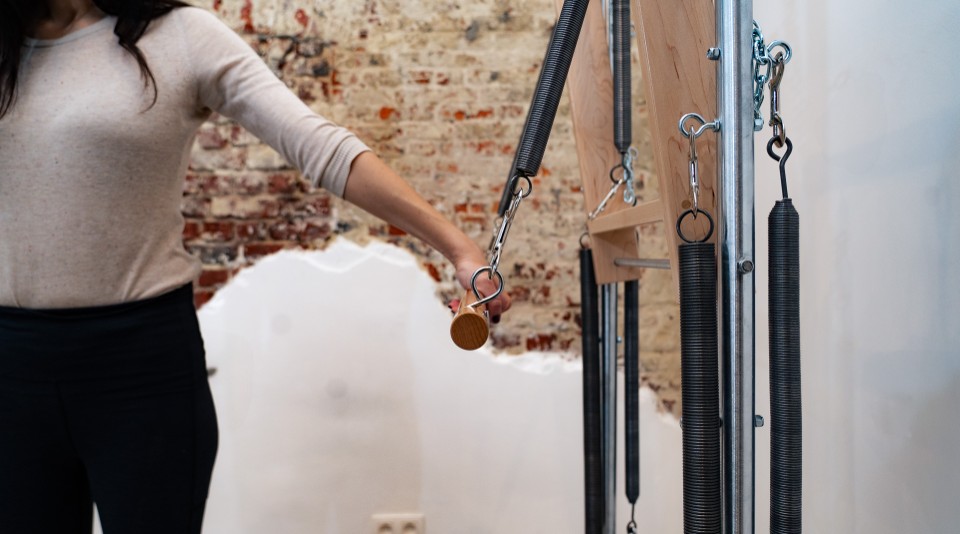
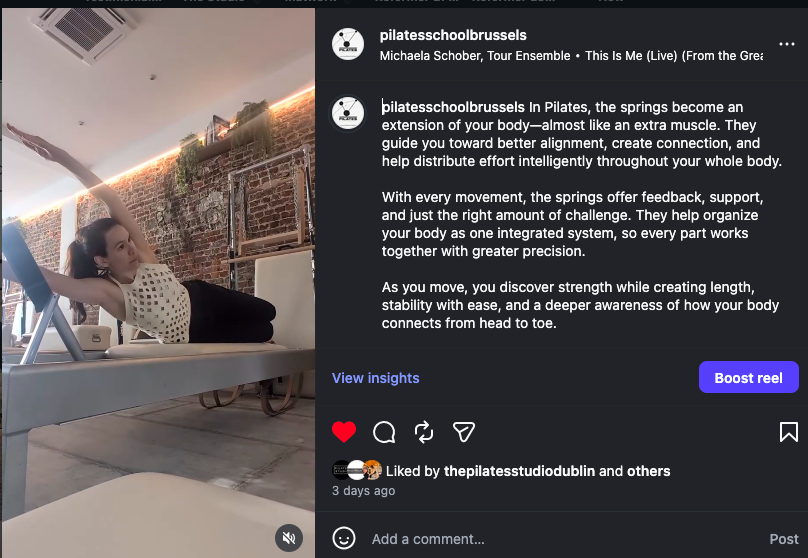
In Pilates, the springs are one of the most distinctive elements of the system, especially in apparatus work such as the Reformer, Cadillac, and Chair. Far from being simple resistance tools, they function as an extension of the body itself—providing feedback, structure, and guidance throughout movement.
At our studio, we often describe the springs as an “additional muscle.” This reflects the way they interact with the body: they respond to every adjustment, every imbalance, and every shift in control. Rather than forcing effort outward, they invite awareness inward.
Springs as a tool for alignment and coordination
One of the key principles in Pilates is alignment. The springs help support this by offering consistent feedback during movement. When the body moves too quickly, loses control, or compensates on one side, the springs immediately reflect that change.
This feedback encourages the practitioner to reorganize movement patterns. The result is not only local correction, but full-body coordination—where the spine, pelvis, shoulders, and limbs begin to function as a connected system.
Working with resistance, not against it
A common misunderstanding in Pilates is the idea of “pushing against resistance.” In reality, the work is far more nuanced. The springs are designed to be worked with, not dominated.
When movement is guided through control rather than force, the nervous system becomes more engaged. The body learns to regulate tension, distribute load efficiently, and maintain stability while still allowing freedom of motion.
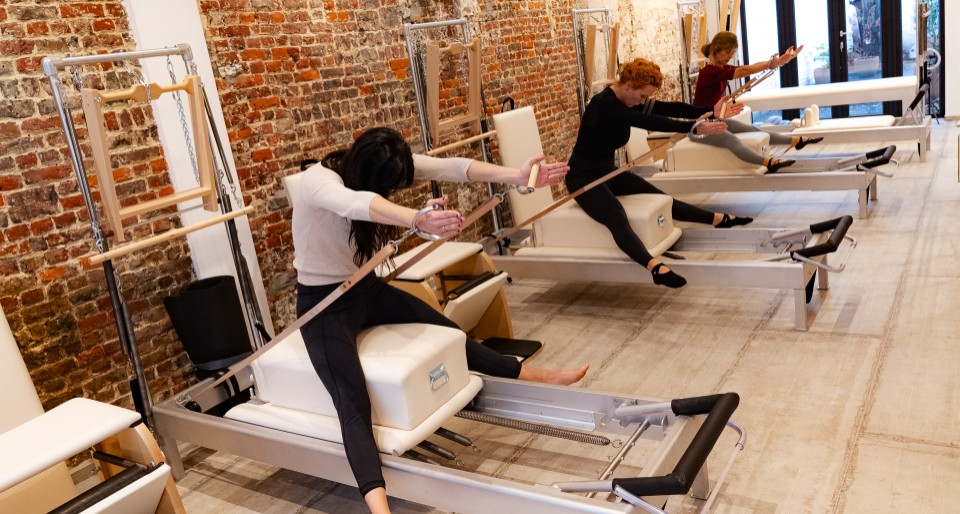
This is particularly evident in exercises on the Reformer, where the same spring system can support both mobility and strength depending on how it is used.
Strength, length, and integration
As the practice develops, a noticeable shift occurs. Strength is no longer separated from mobility, and length is no longer achieved at the expense of stability. Instead, both qualities develop simultaneously.
The springs encourage this balance by constantly requiring adaptation. The practitioner must adjust continuously—refining alignment, engaging deeper stabilizing muscles, and maintaining awareness of the entire kinetic chain.
This leads to what we call integrated movement: a state where the body no longer works in isolated parts, but as a coordinated whole.
The method behind the work at our studio
In our studio, we use the springs as a teaching tool. Every session is designed to help clients understand how their body organizes itself under load, and how small adjustments can significantly change movement quality.
This approach is central to classical Pilates. Whether the goal is rehabilitation, performance, posture improvement, or general strength, the springs remain a constant reference point for control and awareness.
Final thoughts
The springs are not there to be overcome. They are there to inform, guide, and refine movement. When used with intention, they transform how the body understands effort, alignment, and connection. Over time, this work builds a type of strength that is efficient, sustainable, and deeply integrated.
If you are curious about this understanding of Pilates, come join us! We are located at Chaussée de Charleroi 173, in Brussels (in between Saint Gilles, Châtelain and Ixelles). We are unique because we teach Contrology not only in Privates, but in Group Classes of maximum 5 people to provide personal attention while making sure you have fun!