Classical Pilates: A Method That Adapts to You
One of the misconceptions I sadly encounter sometimes is that Classical Pilates is rigid and cannot be adapted to the individual. But I’m here to assure you that it’s far from the truth. In my experience, Classical Pilates has never been about asking every body to fit the exercises. It has always been about using the method intelligently to meet the needs of the person in front of you.
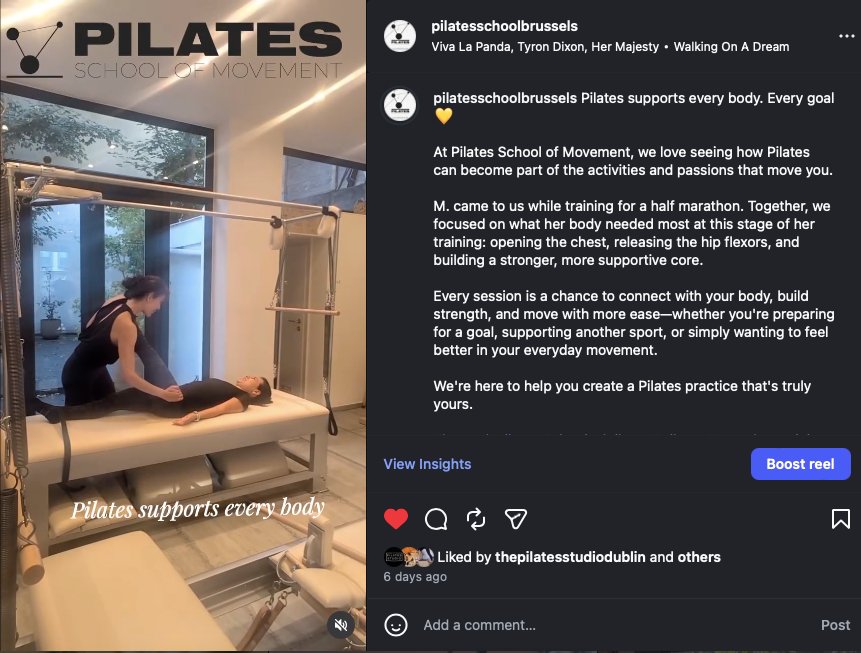
At Pilates School of Movement in Saint-Gilles, Brussels, every lesson begins in exactly the same way: by observing the client. No two bodies arrive in the studio with the same needs, and no two sessions are ever truly identical.
Joseph Pilates Built His Method Around Real People
Joseph Pilates developed Contrology while working with the people around him, beginning during his internment in England during the First World War. He was constantly observing movement, looking for solutions and creating new ways to help people move better.
Many of the pieces of equipment we know today, including the Pedi-Pole, the Foot Corrector and the various Barrels, were created because Joseph Pilates recognized a need in the person in front of him. His inventions were practical solutions to individual movement challenges.
Adaptation has always been part of the method. It didn’t arrive later. It was there from the very beginning.
A Repertoire That Offers Endless Possibilities
The Classical Pilates repertoire is far richer than many people realize. When progressions, regressions, variations and modifications are included, the system contains well over a thousand exercise possibilities.
This depth allows teachers to choose the right exercise, at the right moment, for the right body. Moreover, sometimes progress means moving forward. Sometimes it means simplifying. Sometimes it means choosing a different exercise to achieve the same goal.
“Teach the Person in Front of You”
Romana Kryzanowska often reminded teachers with a simple sentence:
“Teach the person in front of you.”
Those words continue to guide Classical Pilates teachers around the world.
Every lesson starts with observation. We notice how someone walks into the studio, how they stand, how they breathe and how they move that day. We consider their goals, their experience, their energy levels and any recent changes in their lives before deciding how to guide their session.
Learning to See Movement
Classical Pilates teachers are not physiotherapists, nor should we claim to be. Our role is different.
Our education includes anatomy, biomechanics and movement principles, and that learning continues throughout our careers. Just as importantly, we spend months developing the ability to observe movement.
Classical teacher training typically lasts between eighteen and twenty-four months. During that time, trainees observe experienced teachers.
Additionally, they attend classes, teach under close mentorship, and continue refining their own practice. Observation is one of the most valuable parts of the journey. Learning Pilates is not simply about memorizing exercises. It is about learning to recognize movement patterns, understand how different bodies respond and appreciate the many ways the method can support each individual.
My Journey to Classical Pilates
Before becoming a Classical Pilates teacher, I explored different teacher training programs. Therefore, I sought the best education I could find.
This framing influenced my expectations.
I realised that I wanted to learn from teachers who were deeply committed to the method, who continued to study and develop their own understanding, and who brought genuine passion to their teaching. The best teachers I have had have always encouraged me to keep learning from different interpretations and sources, keep questioning and keep studying. That was the kind of education I was looking for, and one of the reasons I was drawn to Classical Contrology.
Glady, my experience during Classical teacher training was very immersive.
For over eighteen months, I observed four to six classes every day. I watched experienced teachers work with clients of all ages, abilities and movement histories. I saw them adapt exercises, change springs, choose different apparatus, modify lessons and respond to the person in front of them. Those countless hours taught me that teaching Pilates is about developing the eyes to see movement and the knowledge to respond appropriately.
The depth of the education, the emphasis on observation and mentorship, and the commitment to continuous learning convinced me that Classical Pilates offered the strongest foundation for the kind of teacher I wanted to become.
Corrective Exercise and a Complete Workout
Contrology was designed to improve the way people move while building strength, mobility and resilience.
A Classical Pilates lesson is both corrective exercise and a complete workout. Throughout the session, the teacher continually observes alignment, movement quality and breathing, making thoughtful adjustments that help each client work safely and effectively.
Structure Creates Freedom
The Classical order was refined over decades for a reason. Each exercise prepares the body for what comes next, creating a logical progression that develops strength, mobility and control.
Rather than limiting the teacher, that structure provides a reliable framework. Within it, experienced teachers make countless decisions based on the person they are teaching. They may adjust springs, choose a different variation, reduce or increase the range of motion, spend more time on one area or leave an exercise for another day.
The order remains. The lesson evolves.
Every Day Brings a Different Body
None of us arrive at the studio exactly the same every day.
Perhaps you’ve had an excellent night’s sleep. Perhaps you’ve been awake with a baby. Maybe you’ve spent the weekend horse riding, partying, hiking or travelling. You may have spent ten hours behind a desk, had a stressful week, be recovering from surgery or simply feel more tired than usual.
All of those experiences influence how we move.
As teachers, we pay attention to those changes. We adapt the lesson to support the body that arrives today.
Why We Teach Classical Contrology
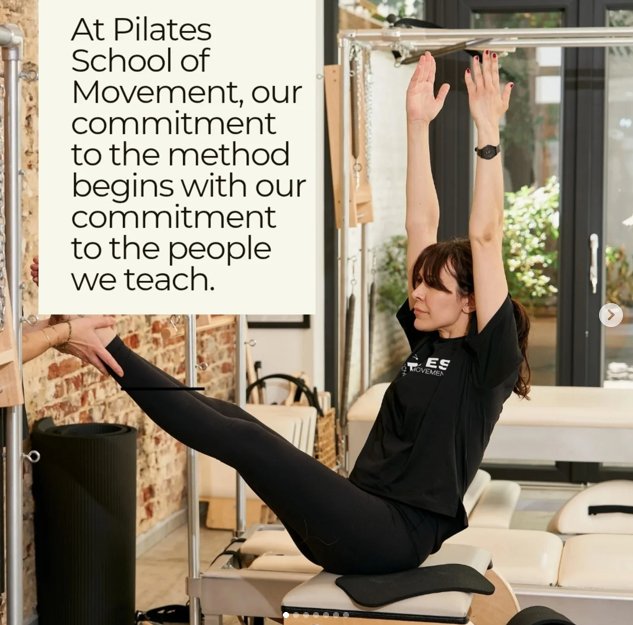
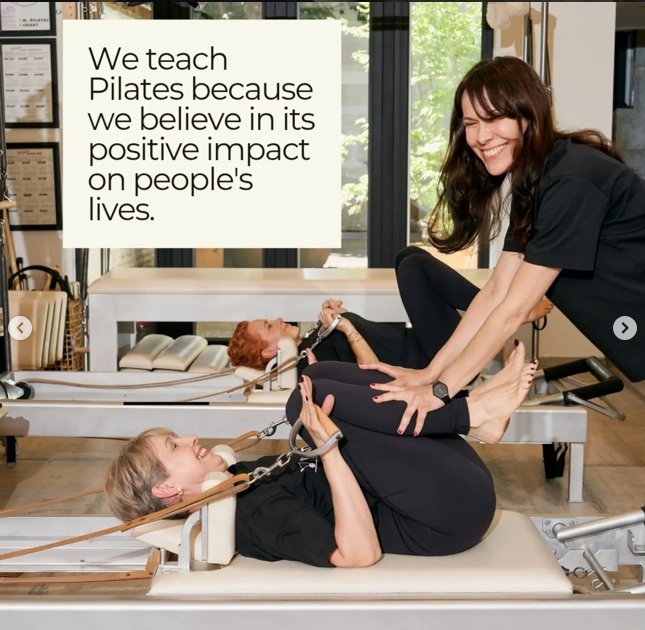
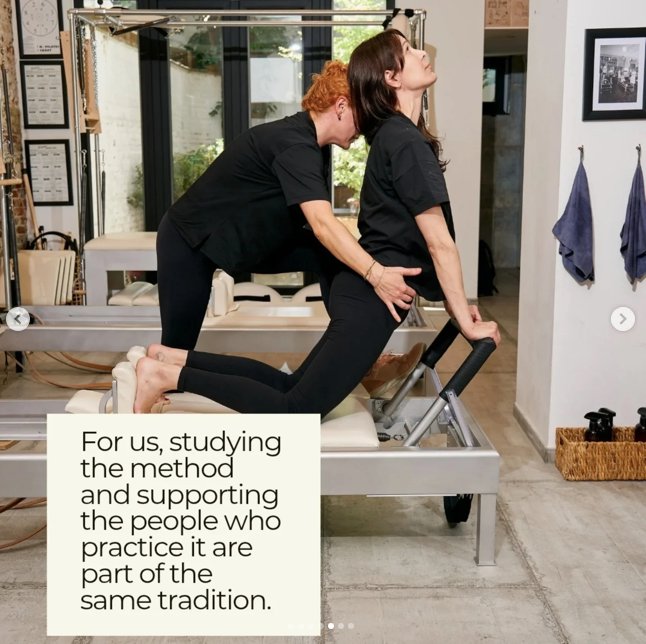
At Pilates School of Movement, we continue learning by practicing together, attending lessons with experienced mentors and remaining students ourselves.
We celebrate every style of Pilates because anything that helps people move with more confidence has value.
We chose to teach Classical Contrology because we have experienced it, studied it and continue to discover new layers within it. We believe its structure, depth and adaptability allow us to serve each client with care and attention. It is the method that resonates most deeply with our experience and our values, and it gives us the tools to meet every client where they are on that particular day.
If you’re curious about Classical Pilates in Brussels, we’d be delighted to welcome you to Pilates School of Movement in Saint-Gilles. Whether you choose a private session or one of our small group classes, you’ll discover that Contrology has always been about helping the exercises fit the person.